
C-Reactive Protein Monitoring After Liposuction: Biomarker Use, Infection Detection, and Measurement Methods

Key Takeaways
- CRP is an acute phase blood marker produced by the liver that elevates rapidly in response to surgical trauma and assists in monitoring systemic inflammation and early postoperative complications.
- Anticipate an initial CRP peak within 24 to 72 hours after lipo, then a gradual decline accompanying healing. Utilize serial tests, not an isolated value, to monitor recovery.
- A persistent or secondary increase in CRP should stimulate clinical correlation for evidence of infection, such as fever or wound changes and lead to prompt diagnostic measures and management.
- Determine each patient’s preoperative C reactive protein and devise a timed monitoring schedule to trend, interpret in light of any comorbidities, and record for longitudinal evaluation of all test results.
- Take into account items that impact CRP such as the extent of surgery, chronic diseases, smoking, obesity, and medications. Mitigate modifiable risks to promote healthy healing.
- CRP is one piece of postoperative monitoring, combining clinical exam, patient symptoms, other labs, and imaging before making management decisions.
A C reactive protein and healing monitoring after lipo is a blood marker to monitor inflammation after liposuction. High CRP can spike within 24 to 48 hours and drop as inflammation and healing continue.
Frequent CRP monitoring assists providers in identifying infection or slow healing and directing follow-up treatment like antibiotics or imaging.
CRP is just one piece of clinical evaluation with wound inspections, temperature, and pain feedback to evaluate healing progress.
Understanding CRP
CRP is a protein that’s produced by the liver and released into the bloodstream when the body detects tissue damage, an infection or some other inflammatory stimulus. As an acute phase reactant, CRP levels can increase rapidly within hours of an insult and decrease just as rapidly as inflammation dissipates. A normal healthy CRP level is roughly 0.8 to 1.0 mg/dL or lower, above which clinicians begin to investigate for active inflammation or infection.
CRP is a sensitive marker of systemic inflammation. It doesn’t tell us where inflammation is, but it does provide a trustworthy indicator that something is going on in the body. Following surgery, including liposuction, the liver pumps out CRP as a response to tissue trauma. Clinicians rely on serial CRP measurements to plot this anticipated post-surgical rise and fall.
A peak in the first 48 to 72 hours with subsequent steady decline is indicative of normal healing. A second rise or sustained elevation can signify infection, hematoma, or other complications. CRP post-liposuction must be understood in the context of clinical signs and other laboratory tests. Small elevations are typical with tissue disruption and postoperative inflammation.
Higher or rapidly increasing values, particularly when accompanied by fever, worsening pain, erythema or wound drainage, are concerning for infection. Consider the following: a patient with normal post-surgical CRP levels of 8 mg/dL on day three, which has dropped to 2 mg/dL by day seven would be considered on a standard recovery curve. If CRP instead increases from 8 to 12 mg/dL or plateaus at a high level, imaging and wound exploration are justified.
CRP testing is widely used across surgical fields, including orthopaedic trauma and general surgery, because it offers a practical, low-cost way to monitor recovery. High-sensitivity CRP (hs-CRP) tests detect much lower CRP concentrations and are mainly used for cardiovascular risk assessment rather than postoperative monitoring.
Non-surgical factors affect CRP: chronic inflammation, infections, autoimmune disease, and some cancers can raise levels. Lifestyle factors matter too — chronic stress, poor sleep, unhealthy diet, inactivity, and excess weight all can increase CRP. Conversely, stress management, 7 to 9 hours of sleep, a diet rich in fruits, vegetables, and omega-3s, regular aerobic and resistance exercise, and modest weight loss reduce CRP. Research estimates each kilogram lost lowers mean CRP by about 0.13 mg/L.
In clinical practice, CRP is part of the picture. Apply it in concert with symptoms, physical exam, WBC, imaging, and wound checks. Timed serial measurements, not a single reading, are more valuable in monitoring healing after liposuction.
How CRP Monitors Healing
CRP, an acute-phase protein, provides a quantifiable indication of the body’s inflammatory response post-liposuction. Tracking CRP gives context to a single lab value. It aids in differentiating the anticipated transient postoperative inflammation from trends suggestive of infection or suboptimal healing. Serial measurements, graphed along a timeline, make it clear if treatment and natural repair are headed in the right direction.
1. The Initial Spike
CRP typically escalates rapidly following surgical trauma, generally peaking within 24 to 72 hours as cells react to tissue damage. This early peak represents the acute inflammatory response and is anticipated post lipo; it does not by itself establish infection.
Charting CRP by day helps set expectations: high on day one or two, then a steady fall. To misread a high early value without recording the operative day invites unnecessary tests or treatment.
2. The Healing Curve
Following the initial surge, CRP will drop as inflammation subsides and tissue healing dominates. A sharp drop indicates that the body is reacting and healing is underway. Monitor the decline.
A rapid decrease indicates the wound is healing well and inflammation is subsiding, whereas a slow decrease or plateau could signify delayed healing or persistent inflammation. Any secondary increase or persistence is a warning sign and should trigger further evaluation.
The CRP trend graph allows you to compare a patient’s curve with expected postoperative patterns, helping guide decisions to extend antibiotics, add imaging, or change dressings.
3. The Red Flag
A persistent high CRP, or a new rise after an initial drop, can signal wound infection, abscess, or other complication. Match abnormal CRP trends with fever, purulent drainage, local erythema or delayed epithelialization prior to calling an infection.
When CRP exceeds common cutoffs, for example, results over 50 mg/L often point to acute bacterial infection. Act promptly with targeted tests: wound culture, ultrasound, or CT as needed.
Early intervention guided by an abnormal CRP trend can reduce complications and hasten recovery.
4. The Baseline Goal
To get back to normal CRP values is a good milestone for complete recovery. Normal is usually under 0.9 mg/dL. Set each patient’s preoperative CRP to control for chronic inflammation or baseline differences.
Compare any changes after surgery to that baseline and decide if the therapy is working. Repeat CRP checks until levels stabilize in the normal range, where a falling value confirms that inflammation is subsiding and therapy is effective.
Persistent elevation results in a re-examination of therapy.
Interpreting Results
Interpreting postoperative CRP needs to be done in conjunction with these other factors. These raw numbers alone are deceiving. Take into account test timing, patient factors, and method variation when deciding whether a spike reflects normal healing, anticipated inflammation from tissue trauma, or pathologic infection.
The Numbers
Normal CRP is typically less than 10 mg/L, with a healthy baseline usually around 0.8 to 1.0 mg/dL, which is equivalent to 8 to 10 mg/L depending on the units reported. Mild elevation is around 10 to 30 mg/L, moderate is 30 to 100 mg/L, and severe is greater than 100 mg/L. Elevated values over 100 mg/L typically indicate severe infection or aggressive inflammation and require immediate clinical attention.
Mean CRP across postoperative days is more informative than single readings. Plotting on a graph daily or every 48 hours can display whether values are falling, plateauing, or rising. Record all CRP results in the patient file with date, time, units, and lab method so that longitudinal evaluation is feasible and consistent. For example, a postoperative CRP that peaks at 60 mg/L on day 2 then drops to 20 mg/L by day 5 is consistent with normal healing following moderate tissue trauma, whereas a secondary increase after an initial decline suggests complication.
| CRP range | Typical mg/L | Clinical implication |
|---|---|---|
| Normal | <10 | Routine recovery or no active inflammation |
| Mild elevation | 10–30 | Expected post-op inflammation or minor infection |
| Moderate elevation | 30–100 | Significant inflammation; monitor closely |
| Severe elevation | >100 | Likely major infection or systemic inflammation |
The Context
CRP must be read with the clinical picture: wound appearance, fever, pain, drainage, and comorbidities. Recent injury, autoimmune disease, chronic inflammatory states, or obesity alter baseline CRP and can confuse interpretation. The type of surgery counts. High-volume aspiration liposuction has much higher early CRP than focused small procedures.
Combine with other markers like white blood cell count, procalcitonin, clinical scores, and imaging as necessary. Consider study design and population when applying published thresholds. Heterogeneity in methods and groups can shift expected ranges and makes cross-study comparisons hard.
Weight loss is associated with CRP change, with studies revealing a weighted Pearson r approximately 0.85 in select pooled analyses and slopes around 0.16 mg/L per 1 kg weight change, but ranging from 0.27 to 0.44 across other cohorts. Scatterplots and regression lines aid the interpretation by providing a visual and quantitative means to estimate the expected CRP shift associated with weight change.
The Timing
The timing of CRP draws impacts meaning. Take a preop baseline, an immediate post-op sample, and then repeat at defined intervals to trend. Typical schedules are day 1 to 3, 5 to 7, and weekly until stabilized. Adjust frequency based on procedure extent and patient risk.
Testing that is too early or too sparse might miss a secondary rise that indicates infection. Devise a monitoring schedule marking precise test dates, clinical milestones, and action thresholds. Keep in mind that, as with any pooled study results, it is constrained by heterogeneity of timing and methods.
Influencing Factors
CRP trends following liposuction represent more than just the operation itself, being influenced by a combination of surgical, patient, and lifestyle factors that determine baseline levels and postoperative kinetics. To interpret correctly, these variables must be taken into account to prevent false positives and to inform clinical decisions. Record any possible confounders in the patient chart.
- Surgical extent and duration
- Degree of tissue trauma and fat removal volume
- Preoperative CRP and other baseline inflammatory markers
- Chronic conditions: autoimmune disease, infections, metabolic syndrome
- Age, frailty, and immunosuppression status
- Smoking, obesity, diet quality, physical activity
- Medications: statins, NSAIDs, immunomodulators
- Recent or concurrent illnesses and injuries
- Time since weight change and weight loss intervention type
- Postoperative complications and wound status
Surgical Extent
More severe tissue trauma or longer procedures tend to yield higher and more prolonged CRP elevations. Procedures with bone work or large soft-tissue dissection, such as fracture repair or total knee arthroplasty, demonstrate a sharper peak and slower return to baseline compared to limited soft-tissue procedures.
Liposuction exists on a spectrum based on volume aspirated and approach. CRP trajectories across specialties help us set reasonable expectations. A liposuction case extracting multiple liters of fat can simulate moderate surgical CRP responses observed in other extensive soft-tissue procedures.
| Surgical Extent | Typical CRP Peak | Time to Fall Toward Baseline |
|---|---|---|
| Minor soft-tissue procedure | Low to moderate | 3–5 days |
| Moderate tissue removal (large-volume liposuction) | Moderate to high | 5–10 days |
| Major surgery (arthroplasty, fracture repair) | High | 10–21+ days |
Patient Health
Underlying conditions alter CRP production and baseline levels. Autoimmune disease or chronic inflammation raises baseline CRP and can dampen or amplify postoperative increases.
Immunosuppressed patients can present with blunted responses even in the face of infection. Older patients frequently exhibit unusual immune patterns and comorbidities that make interpretation more difficult. Don’t forget to always benchmark expectations with baseline markers and preoperative CRP.
Note comorbidities and current immune status in notes so trends are interpreted in context.
Lifestyle Choices
Smoking, obesity, poor diet and inactivity increase baseline CRP and delay healing. Fat tissue sends out cytokines that stimulate CRP, and the heavier you start, the more CRP you make.
Weight loss lowers CRP, with roughly a 0.13 mg/L change per 1 kg lost, and a weighted correlation near 0.30 between weight and CRP change. Type and duration of intervention are important. Bariatric surgery tends to produce greater CRP decreases per kg.
Advise patients to stop smoking, eat better and be more active. Record medications such as statins or NSAIDs that influence CRP testing.
Beyond The Numbers
CRP is one of several biomarkers used to monitor healing after liposuction. It measures a nonspecific acute-phase response to tissue injury, infection, or systemic inflammation. CRP has to be interpreted in the context of clinical judgment, patient-reported outcomes, and correlated with other lab values and physical exam findings to complete the picture of recovery.
The Psychological Impact
Screening regular CRP can be anxiety provoking. Observing numbers increase, even within a normal postoperative range, can lead patients to fear their recovery is deteriorating. Clear explanations from clinicians alleviate that stress.
Explain to patients what a normal postoperative CRP curve looks like and which rises are normal versus which should be concerning. Provide reassurance when mild CRP shifts align with established patterns.
Take, for instance, surgical procedures that tend to demonstrate a CRP peak a few days post-operation. In total knee arthroplasty, values typically increase dramatically at approximately day four and then subsequently decrease. Draw parallels for liposuction and point out differences.
Engage patients in monitoring recovery with easy CRP charts. A one-page chart showing baseline, expected peak window, and return toward baseline helps people see trends rather than react to single values. Have patients bring in symptoms such as fever, increasing pain, and wound changes along with their charted numbers.
Talk personal factors that alter CRP interpretation. Age, chronic renal failure, and other comorbidities can blunt or prolong CRP responses. Some studies show CRP can remain elevated long postoperatively, restricting its utility for diagnosing early implant infections.
This likely applies similarly in soft-tissue surgeries.
The Proactive Approach
Use serial CRP to guide your early-warning system, not as a decision-maker on their own. Routine testing provides a way to catch aberrations from expected patterns of healing and can instigate clinical review and intervention when values deviate from the trajectory.
Make CRP testing a standardized part of post-op care pathways. Some examples include when to test: preop baseline, early postoperative days, and at specific follow-ups. What action thresholds trigger clinical review?
Standard protocols minimize variability and make patients more comparable. Collaborate with surgeons, nurses, and lab technicians for standardized data sampling. Defined roles for sample timing, handling, and reporting minimize noise in results.
With the common protocols, shared CRP trends are more trustworthy for care decisions. Go beyond the numbers. Rising CRP with concordant clinical signs could prompt earlier imaging or empiric antibiotics.
Descending CRP with improving symptoms is consistent with conservative therapy. Don’t take CRP at face value. Combine it with other markers and exams to determine drain, physiotherapy pacing, or more invasive steps. Grasping nuances of CRP and patient context results in more enlightened, less reflex care.
CRP Limitations
CRP is a great marker of inflammation, but it’s not specific to infection. Liposuction, tissue trauma, hematoma, fat necrosis, and normal wound repair all elevate CRP post-operatively. That makes it difficult to apply a single CRP value to determine if a patient has an infection, a sterile seroma, or normal postoperative inflammation.
CRP will elevate with common non-surgical causes such as viral illness, autoimmune flares, or recent vaccinations, decreasing its diagnostic specificity. CRP false positives are common in the immediate postoperative context. Both the direct tissue injury of the operation and regular inflammatory responses in fat increase CRP.
Adipose tissue produces CRP-driving cytokines such as IL-6. Patients with more adipose tissue tend to have higher baseline CRP. Post-surgery weight loss reduces CRP with time. Published means indicate perhaps a negative 0.13 mg/L shift per 1 kg lost.
CRP trends can reflect body composition changes as much as wound status. Chronic diseases, diabetes, COPD, or rheumatologic disorders and minor traumas elsewhere can all provide false positive elevations that mimic surgical complications.
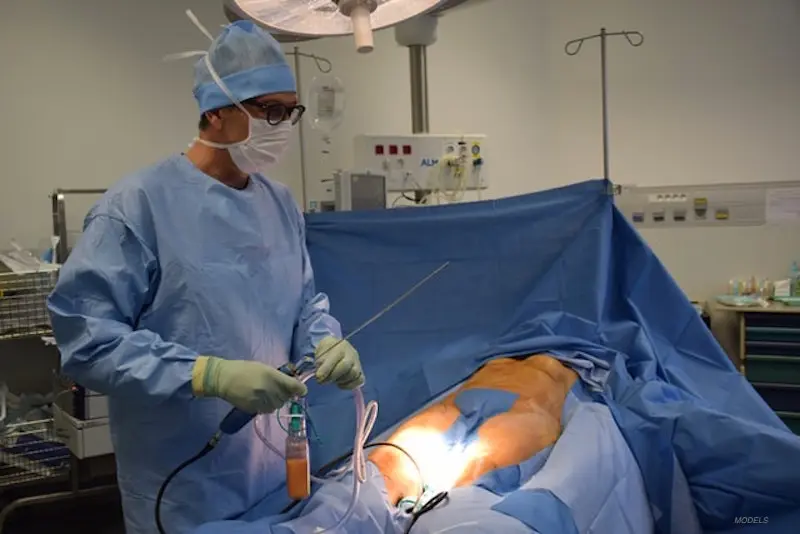
Depending on CRP by itself is in danger of late or inaccurate decisions. A single elevated CRP in the absence of concordant clinical features might lead clinicians to obtain unnecessary antibiotics or imaging. Meanwhile, a normal CRP does not exclude localized infection, particularly early in its course.
Test turnaround slows decision-making. Most facilities return CRP in one to two days, sometimes longer. In rapid-paced clinical scenarios, a lagging lab result can miss the window for early intervention or provide a false sense of security.
Comprehensive assessment is essential. Combine serial CRP measures with careful clinical exam, wound inspection, temperature trends, and targeted imaging such as ultrasound to look for collections. Use additional labs, including complete blood count with differential, procalcitonin where available, and cultures from suspected drainage, to increase diagnostic confidence.
Interpret CRP trends rather than single values and adjust for patient factors like age, sex, baseline comorbidity, and recent weight change that modulate CRP responses.
About CRP Limitations – Laboratory quality and method matter. High-sensitivity CRP assays are different from routine CRP tests, and there is inter-lab variability for absolute values. If monitoring a patient, use the same lab and assay for serial tests when possible.
Note timing in relation to surgery and any other events that might alter inflammatory status.
Conclusion
C reactive protein and healing monitoring after lipo A steady decline in CRP over days indicates normal healing. An increase or a peak that remains elevated indicates infection or other complications requiring immediate treatment. Use CRP with clinical check, wound peaks and symptoms for the complete story. Be aware that medications, chronic illness and recent infections can alter CRP. For routine follow-up, monitor CRP at intervals and compare trends, not single values. For instance, a patient with CRP of 120 mg/L on day 1 that falls to 30 by day 7 is making a good recovery. If CRP continues to rise or remains above 50 mg/L, obtain a clinical evaluation and consider imaging and/or tests. Discuss with your care team about steps and timing.
Frequently Asked Questions
What is C-reactive protein (CRP) and why is it measured after liposuction?
CRP is a blood marker of inflammation. Post-lipo, it detects surgical inflammation or early infection. It assists physicians in monitoring healing progress and the potential need for additional care.
When should CRP be tested after liposuction?
CRP is usually tested at 24 to 72 hours and again at 5 to 7 days if required. Trends matter more than a single value.
What CRP pattern indicates normal healing?
A moderate CRP increase that peaks around day 2 to 3 and steadily decreases by days 5 to 7 typically represents normal healing without complications.
What CRP levels suggest a complication or infection?
Significantly high or rising CRP after day 3 to 5, especially with fever or worsening symptoms, can suggest infection or other complications needing evaluation.
Can medications or conditions change CRP after surgery?
Yes. Steroids, anti-inflammatories, chronic inflammatory diseases, and infections elsewhere can all affect CRP. Inform your clinician of all medications and conditions.
Is CRP the only test needed to monitor healing after liposuction?
No. CRP is one instrument. Clinical exam, symptoms, temperature, wound checks, and occasionally imaging or cultures are critical.
How quickly does CRP return to normal after an uncomplicated liposuction?
CRP generally returns near baseline within 1 to 3 weeks in uncomplicated cases. Your recovery is very individual depending on the extent of surgery and your health.
 Directions
 Call Us
 Email Us