
Can You Reduce Bat-Wing Upper Arms With Liposuction Instead of an Arm Lift?
Key Takeaways
- Bat wings are caused by upper-arm flab and sagging skin and are genetically predisposed as well as a product of aging and weight fluctuations. Therefore, determine the underlying cause before selecting a course of treatment.
- Arm liposuction is a very effective way to remove localized fat and contour a patient’s arms who has good skin elasticity. It does not remove a lot of loose skin.
- Patients with stable weight, minimal skin laxity, and realistic expectations see the best results. For those with more extreme sagging, you’ll likely require a complete arm lift.
- Sophisticated and combination methods like energy-based devices and targeted lipo instruments can contract skin marginally and enhance outcomes without a full arm lift in specific patients.
- Recovery includes compression, minimal downtime, and swelling subsiding, with risks of bruising, numbness, contour irregularities, and rare nerve or lymphatic concerns.
- Long-term success involves stable weight, a healthy lifestyle, and realistic expectations about aging. Think of no surgery and pre/post-op care to support results.
Liposuction for upper arm bat wings without arm lift is a surgical option to remove localized fat and improve arm contour. It removes fat pockets beneath the skin and maintains natural arm movement and sensation.
Candidates generally have good skin elasticity and are looking for visible tightening without a skin excision. Risks, recovery time, and results depend on technique and provider, so seek out a board-certified surgeon for evaluation and individualized planning.
Understanding Bat Wings
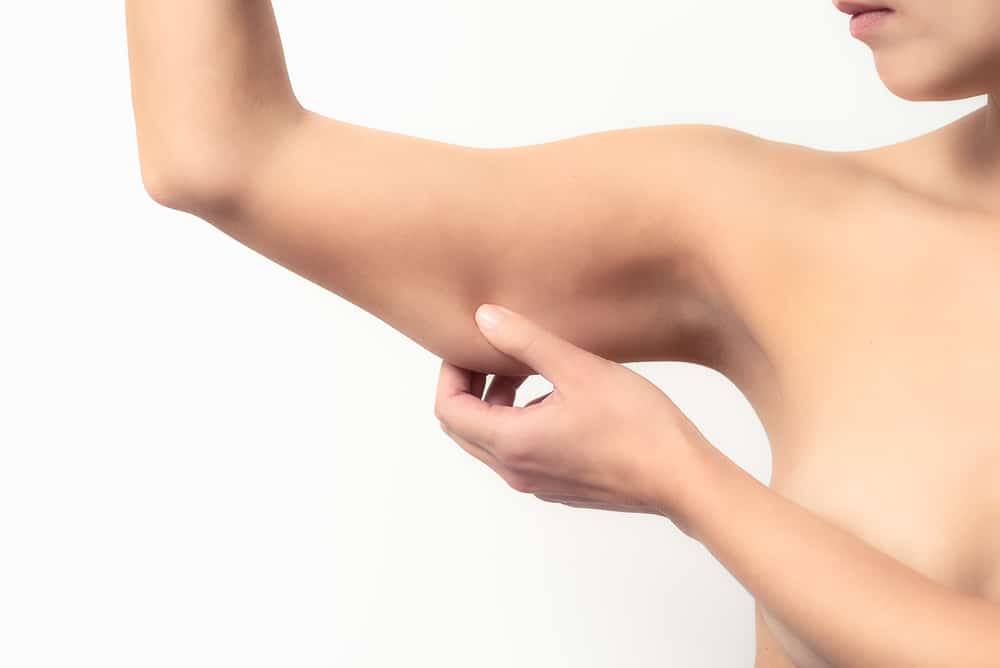
Bat wings are the extra skin and fat of the upper arms that appear to dangle when the arm is lifted. This issue mixes soft-tissue laxity with local fat pockets. It makes you wear clothes differently and can chip away at your self-confidence. Understanding what causes bat wings assists in selecting appropriate therapies and preventive measures.
Genetics
Genetics predetermine where fat is stored and how well the skin ages. Some individuals just tend to hold more subcutaneous fat in the upper arm area, thus even when very lean, there is a tendency for a pad of ‘fuller’ underarm. Inherited traits play a role in collagen production and skin quality.
The less baseline collagen and elastin, the less the skin is able to rebound after weight fluctuation. Families seem to have similar arm traits. Mom and brothers might sport a similar flap, which is why it’s more difficult to prevent for those with a genetic predisposition.
Genetics do not remove all options. Targeted fat-reduction methods and skin-tightening treatments can still help, but expectations must match inherited limits.
Aging
Decreased collagen and elastin result in diminished skin bounce and prominent skin sag. Slower metabolism and repair processes alter how fat is stored and cleared. Hormone shifts, particularly near menopause, can redistribute fat to the arms. Lifelong sun exposure and smoking accelerate skin thinning.
Less skin elasticity as we age causes sag. Hormonal changes affect fat distribution and can accentuate bat wings as time goes on. Even fit individuals with toned muscles can have arm flab as aging impacts the skin more than the subcutaneous fat.
Weight Fluctuations
Heavy weight loss or gain stretches the skin and underlying connective tissue, resulting in some excess arm skin that won’t shrink back. Following significant weight loss, whether after pregnancy or bariatric surgery, your skin may not be elastic enough to comply with your slimmer arm, resulting in unsightly bat wings.
Think bat wings. Like repeated weight gain and loss cycles, they stretch and weaken the supportive tissues, and skin’s elasticity becomes less able to snap back. Even if you’re generally slim, you might still have flabby or saggy arm skin.
Non-surgical options such as cryolipolysis can reduce fat deposits when skin quality is decent, and energy-based skin tightening can enhance mild laxity. When excess skin is substantial, surgical removal through an arm lift is often required. The incision generally extends from the elbow to the armpit and can result in scars that are initially thick and red but tend to be positioned on the inner or back arm where they stay less visible.
Liposuction Alone
Arm liposuction is a low-risk choice to improve your upper arm fat without undergoing a formal arm lift. It attacks subcutaneous fat deposits to etch and trim the arm’s outline. Optimal outcomes are seen in patients with good skin tone and mild to moderate fatty excess.
Liposuction alone does not consistently fix serious loose or sagging skin, so those with severe laxity may be better off with an arm lift or a combined method.
1. The Ideal Candidate
Candidates usually have localized fat bulges on the inner or posterior arm, skin that maintains good recoil, and reasonable expectations for modest contour change. If you have stable weight, reasonable habits, and no significant medical problems, you will probably experience a durable advantage.
Patients with significant skin laxity, large volumes of redundant skin, or very poor skin quality are not good candidates, as lipo alone will leave residual sag. Many patients choose lipo alone to avoid a long scar, and for patients who prioritize minimal visible scarring, lipo provides small, well-hidden incisions that can be strategically placed on the inner arm or in the axilla.
Winter is a popular time for it because compression sleeves are convenient to wear under layers while recovering.
2. The Procedure
Arm liposuction begins with small incisions, injection of tumescent fluid and suction-assisted fat removal. The procedure is performed under local anesthetic with sedation, so that the majority of patients are awake but comfortable.
Advanced sculpting techniques, such as power-assisted, ultrasound-assisted, or microcannula, help shape the arm and can treat the entire 360-degree circumference including the shoulder, biceps, triceps and axilla. Certain methods boast eliminating as much as 90 percent of undesirable fat and can operate through several fat layers, promoting skin retraction.
- Steps: Mark, anesthetize, infiltrate tumescent fluid, suction fat, contour, and close incisions.
3. Expected Results
Usual results are sleeker, more tapered arms and elimination of stubborn fat pads. Looking final is all contingent on skin recoil and good elasticity. The skin retracts smooth, while poor elasticity leaves loose skin after the fat is removed.
You will see initial improvement almost immediately, but swelling obscures the final result. Expect your defined contours to emerge over the next few weeks to months. Liposuction alone results are lasting if weight is maintained.
4. Potential Risks
Typical side effects are bruising, swelling, temporary numbness, and mild pain. Less common problems include contour irregularities, persistent swelling, or nerve injury.
Bad skin quality increases the risk of saddening sag after defatting. Too much or uneven fat extraction can result in surface irregularities.
5. Recovery Path
Wear compression sleeves to minimize swelling and support tissue. Light activity resumes in days, but full recovery can take weeks. Bruises and swelling subside.
Consider energy-based skin treatments post-op to enhance firmness.
Anatomical Realities
The upper arm is made of distinct layers: skin, subcutaneous fat, deeper connective tissue, nerves, blood vessels, and lymphatic channels. Every layer reacts differently to handling. Fat can usually be liposuctioned away, but skin is going to recoil only so much. Awareness of these layers informs realistic expectations and prudent technique choices.
Skin vs. Fat
Too much fat in the posterior arm pocket often liposuctions well, especially if the fat is dense and focal and not diffuse. Excess skin, on the other hand, such as you see after massive weight loss, does not vanish post liposuction. Thin, inelastic skin often does not contract enough and can leave behind residual sag, those dreaded bat wings.
In those cases, brachioplasty, or arm lift, that removes skin may be necessary. Brachioplasty does leave a scar along the inner arm, which for most patients is a fair trade-off for the contour gains, but it’s not for everyone.
Fat quality matters: firmer, lobulated fat pads are more predictable to remove than fibrous, diffuse fat. A judicious preoperative evaluation of skin laxity and fat thickness is critical. Some patients can achieve their goal with one liposuction session, while others require staged procedures or excision combined with liposuction to obtain their desired contour.
Non-surgical skin-tightening methods do little in the face of marked laxity.
Nerve Proximity
Big nerves are so close to the inner arm and axilla that accuracy is key. The medial antebrachial cutaneous nerve and radial and ulnar nerve branches may be endangered with deep or blind instrumentation. Nerve injury can lead to numbness, constant pins and needles, or weakness in motion, interfering with routine activities.
Surgeons chart nerve routes and deploy careful cannula positioning and superficial planes adjacent to fragile areas to mitigate danger. Soft touch, paying attention to anatomical landmarks, and not doing aggressive suction near the neurovascular bundle are pragmatic safety measures.
Discussing what possible changes the senses might experience preoperatively sets realistic expectations.
Lymphatic Drainage
The arm’s lymphatic network balances fluids and immune transport. Brash liposuction, blunt-force injuries or extensive surgical dissections tear up these conduits and cause chronic swelling or, occasionally, lymphedema.
Respect for the superficial lymphatics with conservative suction, limited zones of treatment near the axilla, and staged procedures as needed reduces risk. You should monitor yourself postoperatively for persistent swelling, skin tightness, or heaviness.
Compression garments are usually worn for multiple weeks to aid healing, reduce fluid accumulation and assist the skin in conforming to the new shape.
Advanced Techniques
Advanced techniques broaden the possibilities for tackling upper arm ‘bat wings’ in the absence of a surgical arm lift. They combine fat elimination with skin tightening and contouring measures.
To help orient choice, here’s a comparison table of popular advanced methods along with their advantages and limitations.
| Technique | Benefits | Limitations |
|---|---|---|
| Radiofrequency-assisted (e.g., BodyTite) | Immediate contour change; skin tightening; one procedure often; long-lasting results up to ~5 years | Requires tumescent anesthesia; results improve over ~6 months; not for severe laxity |
| Ultrasonic-assisted liposuction | Precise fat targeting; helps release fibrous fat | Heat control needed; learning curve for safety |
| Laser-assisted liposuction | Skin contraction; fine contouring | Variable tightening; often less durable than RF |
| Microcannula liposuction | Low trauma; fewer bruises; smooth finish | Limited skin tightening alone; depends on skin quality |
| Combination liposuction + energy device | Best balance of fat removal and tightening; may avoid brachioplasty | Higher cost; longer procedures; recovery includes garments and activity limits |
Energy-Based Devices
Radiofrequency systems such as BodyTite use bipolar radiofrequency energy delivered internally and externally to heat tissue. Heat liquefies some fat, helps suction, and activates collagen in the dermis and subdermal layer.
Tumescent solution is injected first for numbness and safety. Then the machine is run to sculpt and tighten. Results appear rapidly and continue to improve for as long as six months, occasionally producing long-lasting contour alteration for five years or more.
These are good for patients with mild skin laxity who want to avoid long arm scars. They tend to be one-and-done rather than repeated laser treatments. Patients must expect a recovery period. They should avoid heavy lifting for four to six weeks and wear compression garments for several weeks.
Precision Tools
Microcannulas and uniquely shaped cannulas allow the surgeon to remove fat in layers near the skin. Smaller instruments minimize trauma and bruising and decrease the potential for bumps or dimples.
Precision maintains the natural transitions between the axilla and upper arm, creating a sculpted rather than ‘hollowed’ look to the arm. Popular instruments are 2–3mm microcannulas, power-assisted handpieces, and blunt-tipped curved cannulas for the posterior arm.
Expert technique trumps any one tool. Bad application increases the risk of contour irregularities.
Combination Approaches
Pair liposuction with an energy-based device to remove bulk while tightening skin. For patients with moderate fat and mild laxity, this hybrid approach can postpone or totally avoid the need for brachioplasty.
Examples include traditional liposuction plus BodyTite or microcannula liposuction followed by external RF passes. These combinations provide balanced sculpting and smoother skin.
Recovery mirrors each component, including compression, limited activity, and gradual gains that mature over months.
Managing Expectations
Managing expectations educates individuals on the restrictions and probable outcomes of upper-arm liposuction without an arm lift. A crisp summary sets the context for specific points underneath, and patients can use it to consider benefits, risks, and recovery before selecting surgery.
Realistic Outcomes
Arm liposuction can definitely enhance arm contour and reduce the bulk that contributes to “bat wings.” Enhancement is generally most dramatic when surplus is predominantly adipose instead of significant lax dermis. Noticeable change is largely dependent on the initial volume of fat and your skin’s elasticity.
Younger patients or patients with good collagen tend to have a smoother recoil after fat removal. Not everyone will have rock-hard arms when they’re done. A little residual sloppiness, slight asymmetry or small surface imperfections can persist.
While scars are negligible since the incisions are tiny, no big scars does not mean scarless or flawlessly even. Manage your expectations to concentrate on transformation, not Torah-level perfection.
A checklist to review before any arm contouring procedure helps set proper expectations: baseline photos, realistic timeline for results, potential need for skin-tightening or secondary procedures, risks and complications, recovery time, and follow-up schedule. Review these with your surgeon and maintain hard copies of agreed upon goals.
Long-Term Outlook
Long term results depend on weight stability. If you manage expectations and maintain a stable weight within a few kilos, your body won’t reaccumulate fat in treated or adjacent areas. Aging and genes will still take their toll on skin.
It’s natural for skin to sag gradually over a span of years following excellent surgery. If skin laxity worsens, further procedures, such as noninvasive skin tightening or a formal arm lift, might be necessary down the line.
Expect a gradual reveal of the final contour. Full results commonly take several months as swelling subsides and tissues settle. Track your progress with before and after photos in consistent positions and lighting.
Know when you are courting disaster and when you need to recover. Healing times depend on the individual, their age, smoking status, and overall health. Talk with your surgeon about potential complications such as contour irregularity, extended swelling, or temporary numbness.
Patient Satisfaction
Nearly all patients feel more confident and satisfied following arm liposuction when their expectations match up with realistic outcomes. Satisfaction is greater in patients with good baseline skin quality and realistic goals discussed preoperatively.
Dissatisfaction often stems from expectation mismatches, such as expecting a lift effect when only fat removal was intended. Collect patient testimonials and case photos that correlate with your anatomy and objectives.

Inquire about average recoveries, how long results lasted for their comparable patients, and what percentage required follow-up surgeries. An honest consult with a professional reduces hopes and makes the experience better.
Beyond Surgery
Taking on upper-arm “bat wings” without an arm lift involves a trifecta of non-surgical treatments, lifestyle tweaks, and meticulous perioperative planning when procedures are employed. Non-surgical approaches are appropriate for individuals with mild to moderate fat or skin laxity.
Dramatic skin redundancy after massive weight loss typically still requires surgery to achieve a smooth contour. For patients not ready for surgery or who are poor surgical candidates, we have focused fat reduction, energy-based skin tightening, and targeted muscle work alone or combined.
Pre-Operative Care
Have a diet and exercise regimen that maintains a healthy body composition pre-procedure. Don’t crash diet or fluctuate in weight because these things alter skin elasticity.
Cease blood thinners and NSAIDs as guided by your clinician and stop smoking weeks in advance to reduce complications and accelerate recovery. Keep compression garments on hands; some require them for weeks.
Line up assistance at home for those first days post-treatment and prepare a recovery zone with convenient access to water, nutritious food, and medicine. Make a list of medical records, consent forms, medications, garment sizes, emergency contacts, and drop-off or pick-up arrangements.
Post-Operative Care
- Wear compression garments as instructed, typically 24/7 for the initial 1 to 3 weeks, then during the day for weeks beyond.
- Preserve the operative site, clean and dry. Follow wound-care instructions carefully.
- Take your pain medication and ice packs for swelling as directed.
- Start to gently move your arms throughout the day to keep the joints loose and prevent stiffness.
- Steer clear of heavy lifting, resistance training, and sweating profusely for approximately 2 to 6 weeks depending on the procedure.
- Look for fever and redness. Report fever or worsening pain or drainage immediately.
- Follow-up visits for dressing changes, suture removal, and progress checks.
Light activity aids blood flow and prevents stiffness, while rest avoids tension on recovering tissue. Be on the lookout for infection, abnormal swelling, or lingering numbness and reach out to your provider immediately.
Beyond surgery, daily care routines assist the recovery process but must be tailored to the healing and instructions of individual patients.
Lifestyle Impact
Adopt lasting habits: consistent weight management, regular strength training for the triceps and overall upper-body conditioning, and a protein-rich diet that supports tissue repair.
Skin care such as hydration, sunscreen, and topical retinoids can assist with texture but will not replace lost elasticity after significant weight loss. Radiofrequency and related technologies can enhance mild laxity.
Sometimes a single treatment provides significant tightening, but it’s all dependent on skin quality. Pairing liposuction with energy tightening frequently provides improved contour and less loose skin problems than either in isolation.
Track measurements, photos, and fitness markers to see your progress and stay motivated.
Conclusion
Liposuction can reduce upper arm fat and narrow the appearance of bat wings. It’s best for individuals with good skin tone and small to moderate fat deposits. Fat removal provides a cleaner arm contour. Skin that already hangs and has poor tone can still sag when the fat comes out. Muscle or heavy skin require other solutions, such as skin tightening or a traditional arm lift.
Schedule a consult with a surgeon that employs transparent imagery and achievable standards. Request before-and-after photos of like cases. Record recovery measures, including rest, compression, and gradual reintroduction to activity. For non-surgical assistance, combine targeted strength work and consistent weight loss to maintain the effect. Book a consult to chart the best course for your arms.
Frequently Asked Questions
Can liposuction alone tighten bat wings (upper arm sagging)?
Liposuction can eliminate fat, but it doesn’t really tighten loose skin. If the skin is nice and elastic, you’ll see improvement. When the sag is moderate to severe, liposuction alone is typically not enough.
How do I know if I need an arm lift in addition to liposuction?
A surgeon will evaluate skin laxity, fat, and muscle. If skin does not pass the pinch test or sags with your arm down, an arm lift (brachioplasty) is commonly suggested.
What are the risks of choosing liposuction without an arm lift?
Dangers include lasting sagging, uneven contours, and loose skin. You may face typical liposuction risks: bruising, swelling, infection, and asymmetry. A consult minimizes surprises.
Are there advanced liposuction techniques that improve skin tightening?
Yes. Procedures such as power-assisted, ultrasound-assisted (VASER), and radiofrequency-assisted liposuction can induce a certain degree of skin tightening. This varies for everyone and does not equal a formal lift.
How long does it take to see results after liposuction on the arms?
Initial results show within weeks as swelling subsides. Final results typically become apparent at 3 to 6 months, contingent upon your healing and use of a compression garment.
Can non-surgical treatments replace an arm lift?
Non-surgical treatments (radiofrequency, ultrasound, lasers) can tighten mild laxity but cannot compare with an arm lift for moderate-to-severe sagging. They are ideal for those with mild skin laxity seeking minimal downtime.
How should I prepare for a consultation about arm contouring?
Come armed with a medical history, photos of the results you want, and inquiries regarding risks, recovery, and results. Request before and after photos from the surgeon’s prior patients to gauge skill.
 Directions
 Call Us
 Email Us