
Preventing Blood Clots After BBL: What You Need to Know
Key Takeaways
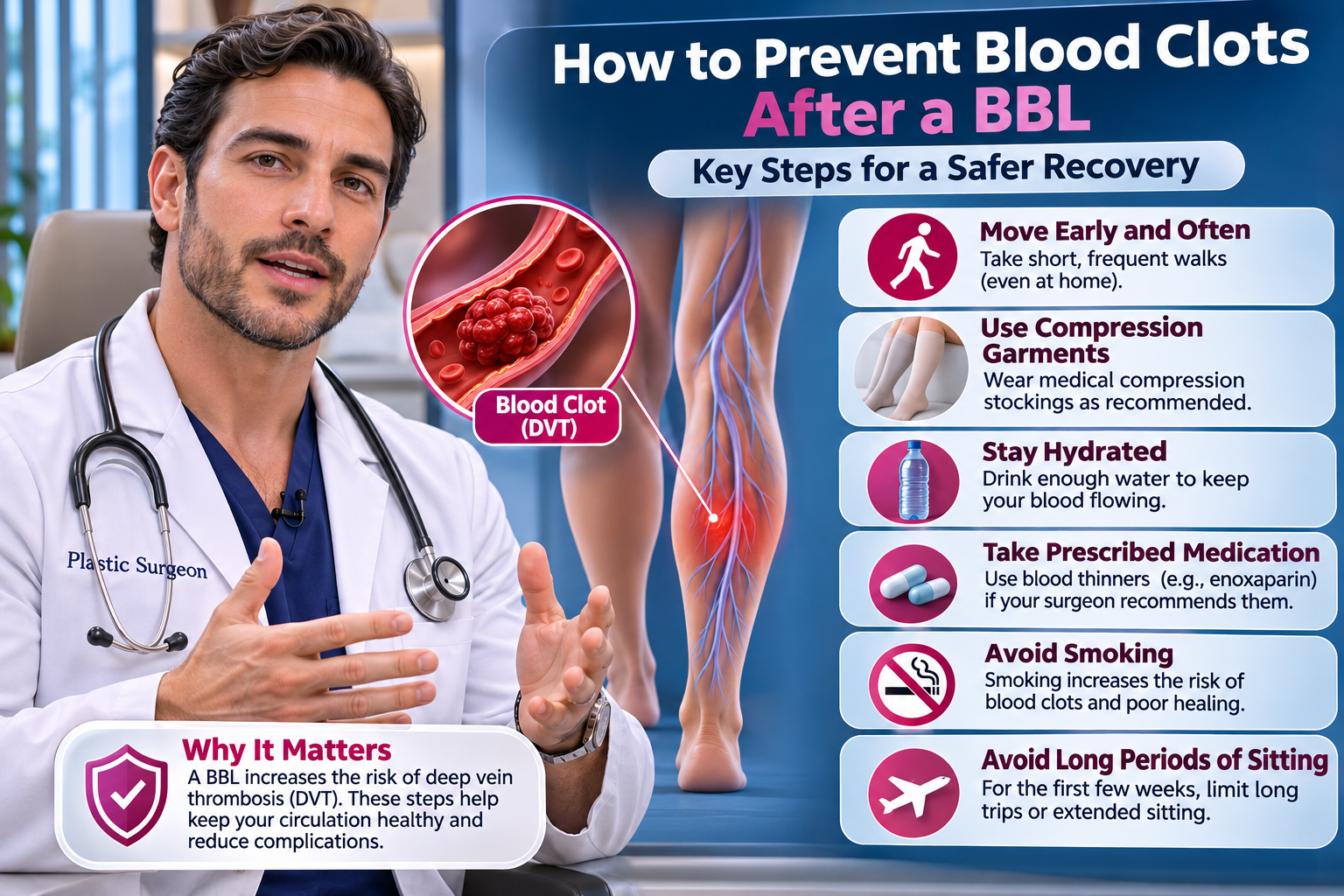
- Pinpoint personal risk factors like obesity, smoking, previous blood clot, medication history, age, and lengthy surgery and share them with your provider to tailor a prevention plan.
- Get gentle walking and regular movement started as soon as cleared. Use a simple checklist to track ambulation goals and shun sitting or lying for long stretches.
- Utilize all prescribed measures such as correctly fitting compression devices and anticoagulants as instructed, and watch for side effects or skin complications.
- Stay consistently hydrated, avoid diuretic beverages, and set hydration reminder alarms to keep your circulation flowing healthily.
- Observe safe positioning regulations. Do not sit on the buttocks until told so. Reposition regularly to avoid blood pooling during recovery.
- Understand key warning signs like new leg pain with swelling or warmth, sudden chest tightness, and unexplained shortness of breath. Pursue prompt medical attention if they develop.
Blood clots are a medical risk after body contouring surgery and need prompt attention. Risk factors include limited mobility, previous clot history, and hormone therapies. Some general prevention measures are early ambulation, compression garments, hydration, and blood thinners when indicated. Follow-up visits assist in monitoring for symptoms such as leg pain or shortness of breath. The body discusses timing, medications, and practical care.
Risk Factors
Blood clot risk factors following a BBL come from a combination of patient health, surgical decisions, and aftercare. Deep venous thrombosis (DVT) can develop when one or more elements of Virchow’s triad are present: slowed blood flow in the legs (venous stasis), injury to vessel walls during surgery, and a blood state that favors clotting (hypercoagulability). Each of the risk factors below connects back to those mechanisms and helps explain what to watch for and why it matters.
Obesity, previous clot history and smoking increase baseline risk. Higher body mass index restricts circulation in the legs and predisposes to venous stasis. A previous DVT or PE indicates a clotting proclivity, and physicians tend to manage these patients pre and postoperatively in a different manner. Tobacco constricts vessels and impacts blood flow and wound healing, so quitting long before surgery reduces risk. Age and genetics matter: older patients and those with inherited clotting disorders face higher chances of DVT and pulmonary embolism.
Lying in bed during and after surgery puts you at risk through venous stasis. Prolonged operations or bed rest compromise calf muscle pump activity, decelerating venous return. BBLs that extend for numerous hours or necessitate extended recuperation in bed are at higher risk. Promote early, gentle mobilization, calf pumps, and ambulation as soon as safe. Mechanical methods like graduated compression and intermittent pneumatic compression during and after surgery decrease stasis.
Medications, hormones and supplements can alter clotting risk. Estrogen-containing birth control, hormone replacement, and some cancer therapies increase clot proclivity. Common over-the-counter medicines like aspirin and ibuprofen and popular supplements like St. John’s Wort and vitamin E should be discontinued at least one week before surgery because they impact bleeding and healing. Restrict alcohol for a minimum of two weeks prior to surgery as it affects clotting and hydration.
Surgical factors matter: general anesthesia, long operative time, large volumes of fat injection, and injecting into deep gluteal muscles all raise risk. General anesthesia decreases extremity motion and can attenuate protective reflexes. Longer surgeries expose you to more stasis and endothelial injury. Injecting fat too deep can cause vessel damage and fat entering into the bloodstream, which can lead to pulmonary fat embolism, with an estimated mortality of about 1 in 3448. Surgeon experience and technique matter a lot. Experienced surgeons almost never inject deep into muscle, restrict volume per session, and use safer planes. This drives down complications.
Prevention Protocols
Targeted prevention protocols are key to mitigating clot risk post-BBL, covering ambulation, compression devices, anticoagulants, hydration, and patient positioning. Your individual risk factors help formulate the plan; there’s no one size fits all. For higher-risk patients, protocols can range from perioperative heparin, a short course of oral anticoagulants for 10 to 14 days, and overnight observation following large-volume liposuction in an accredited facility to detect early complications.
1. Early Ambulation
Start easy walking as soon as the surgical team has given you the clearance. This will help to get the blood flowing through your legs and pelvis. Early and frequent walking is among the easiest and most powerful clot-lowering measures. Short, frequent walks are more effective than a single long walk. Schedule standing or moving every one to two hours during waking hours and use a checklist to mark activity: time walked, steps, and any symptoms such as calf pain or swelling. Avoid extended bed rest unless ordered. If you’re not getting around much, do ankle pumps, leg lifts, and seated marches to keep the circulation active.
2. Compression Devices
Wear compression stockings or intermittent pneumatic compression devices as prescribed to promote venous return from the legs. A proper fit matters: stockings that are too tight can cause pressure injuries, while loose ones won’t help. Inspect skin daily for redness or pressure marks and report problems. For example, many providers advise wearing compression stockings for approximately one week after surgery. Use the manufacturer’s rotation and duration recommendations, and modify stockings if swelling shifts. If devices irritate, switch to something else on your provider’s recommendation, so you stay in the habit.
3. Prescribed Anticoagulants
Take anticoagulants as prescribed and maintain a medication schedule so you don’t miss or double up on doses. For higher-risk patients, providers could utilize perioperative heparin and maintain oral anticoagulants for 10 to 14 days or maintain blood thinners for five to seven days as clot risk peaks around one week post-op. Be aware of side effects such as unexplained bruising, bleeding, and intense headache, and seek help right away. Store medications securely out of the reach of kids and animals and keep a list of medications on hand for any post-care provider.
4. Hydration Goals
Stay well hydrated to help keep your blood less viscous and flowing more smoothly. Take small sips throughout instead of chugging. Use phone alerts to remind you and monitor with an easy log or app. Reduce alcohol and caffeinated beverages during recovery as they increase dehydration risk. If fluid requirements aren’t obvious, inquire with the surgical team about a goal based on body size and medications.
5. Safe Positioning
Steer clear of sitting on leg veins or the lower body for extended periods and use pillows or cushions to maintain the prescribed post-BBL positioning. Reposition at fixed intervals, even at night, and compile a brief safe versus unsafe position list to adhere to. Shift frequently to prevent blood pooling and utilize props, such as foam wedges or bolsters, per care provider recommendations to keep hips elevated and circulation moving.
Warning Signs
Watch for warning signs after a BBL that could indicate a blood clot, fat embolism, infection, or other complications. As with anything, early recognition and prompt action reduce risk. Here are the primary symptoms to watch, how they differ from normal recovery aches, and what to do when warning signs emerge.
Leg Pain
New or intensifying calf or thigh pain can indicate a deep vein thrombosis (DVT). Tenderness that feels focal to one spot, swelling that causes the leg to appear larger than the other, and warmth or redness over it are all significant. Check both legs regularly. If one seems significantly firmer, redder, or more swollen, record the change with the time it began and the duration of each episode. Indicate if walking, standing, or rest relieves or aggravates pain. Give clear details to your care team: side (left or right), exact location, intensity on a 1 to 10 scale, and whether you felt any sudden pull or tightness. Don’t assume leg pain is simply normal post-op soreness. Get it checked quickly.
Chest Tightness
Sudden chest pain, pressure, or squeezing, or a heaviness in the chest can indicate an embolism and is a medical emergency. If you experience this, get emergency care right away, even if the surgery was weeks or months before. Look out for sweating, nausea, dizziness, or radiation to the jaw, neck, shoulder, or arm. Note when the chest discomfort started and how long each episode lasted. This assists first responders and physicians in determining next steps. Consider these symptoms emergent. Immediate attention can be life-saving.
Shortness Breath
Unexplained trouble breathing or fast breathing at rest or with minimal effort warrants immediate evaluation. Note whether breathlessness comes with coughing, chest pain, fainting, or a sudden drop in ability to speak full sentences. Fat embolism symptoms can start within 48 hours after surgery, though they may appear right away. Fat embolism carries a fatality risk in 7 to 10 percent of cases, but early treatment lowers that risk. Keep a log of each episode: what you were doing, how long it lasted, and any relief measures used.
Warning signs — quick-reference list:
- New leg swelling, redness, warmth, or pain
- Sudden chest tightness or pressure
- Shortness of breath or rapid breathing
- Sudden fainting or near-fainting
- Increased redness, swelling, pus, or fever at incision site
Don’t self-diagnose or wait for symptoms to subside. Get help right away.
Recovery Restrictions
BBL recovery has restrictions in place to reduce your risk of thrombosis and to safeguard the surgical area. Active recovery, restriction, and cautious get-up selections are the basis of prevention. Physical therapy and light exercise sometimes begin the day after surgery to re-establish motion, strengthen the lower body, and keep blood flowing through deep veins to lessen clot risk. Compression stockings are typically prescribed to assist venous return. Blood thinners could be initiated while in the hospital and continued at home to prevent clots, particularly for those with additional risk factors.
Don’t do any strenuous exercise, heavy lifting, or high-impact activities during initial healing. High impact workouts cause quick muscle spasms and abrupt changes in pressure that increase clotting risk and can stress grafted fat and incisions. For the initial two to six weeks, limit gym work to light walking and range-of-motion exercises. Examples include skipping weight training, running, HIIT, and heavy household lifting. After six weeks, with your surgeon’s go-ahead, slowly phase back in resistance work, beginning with light loads and careful observation for pain or swelling.
Do not sit directly on your buttocks until cleared by your provider. Direct pressure can cause fat grafts to shift and restrict blood flow. Sit only when necessary with a specially designed BBL cushion or by lying on your stomach or sides. Even short, frequent breaks to stand and walk around assist blood flow and reduce the risk of DVT. When sitting, lean weight forward onto your thighs instead of on the grafted area. Adhere to specific recovery timing as advised by your surgeon. Most recommend steering clear of direct sitting between two to eight weeks based on technique and healing.
Avoid travel, particularly long car rides or flights, in the first few weeks post-op. Immobility during travel increases DVT risk. The greatest risk occurs two to 10 days after surgery, and your overall elevated risk may last approximately three months. If travel is unavoidable, segment trips into short segments, stand and walk every 30 to 60 minutes, wear compression stockings, and follow anticoagulant schedules. For flights, consider aisle seats so you can get up and move easier and discuss with a clinician in-flight anticoagulation or intermittent pneumatic compression devices for high-risk patients.
Checklist: when to resume specific activities after recovery
- Walking and light PT: start day one, continue daily for months.
- Sit directly on buttocks. Wait until provider clearance, which is commonly two to eight weeks.
- Return to office work typically takes 1 to 2 weeks if mobility permits and long sitting is avoided.
- Return to driving: once pain is controlled and no longer on sedating meds, often one to two weeks.
- Resume moderate exercise: usually 4–6 weeks with gradual increase.
- Full high-impact training is often 8 to 12 weeks or more, per surgeon guidance.
Watch for swelling, pain, cramp, or tenderness in one extremity and get care right away.
Clinical Insights
Postoperative blood clot prevention following a BBL needs clarity on risks, timing, and actionable steps. Without prevention, fatal PE rates are 0.1 to 0.8 percent, so intentional steps count. Early events include fat embolism. The macroscopic form usually appears within 24 hours, while microscopic changes evolve over 24 to 72 hours. A 2026 prospective observational study demonstrated that after aesthetic surgery, patients on their return flights experienced dramatic oxygen desaturation and increasing popliteal vein dilation, setting up Virchow’s triad of conditions that heighten clot risk while traveling.
Recent research reveals best practices combining mechanical and pharmacologic measures. Low-molecular-weight heparin initiated intra- or postoperatively and continued for a specified duration reduces VTE in high-risk patients. Perioperative sequential compression devices decrease stasis in the legs. Early ambulation and hydration are frequently associated with reduced clot rates. A typical fluid challenge might be two to two and a half liters per day to keep blood less viscous. Risk stratification tools modified for cosmetic surgery assist in determining who needs more aggressive prophylaxis.

Clinicians suggest that mixing multiple approaches together, not just one, works best. In the majority of patients, this entails risk stratification, mechanical prophylaxis in hospital, chemoprophylaxis when indicated, and specific discharge instructions on ambulation and hydration. Travel counseling is essential, as postponing long-haul flights for a number of days and wearing compression stockings during travel lessens risk. Remember that 39 to 48 percent of surgeons historically didn’t offer formal clot prevention post-liposuction, so patients should inquire about their surgeon’s protocol and get second opinions when uncertain.
Personalized care plans are important because factors like age, BMI, previous VTE, smoking, hormone therapy, and length of surgery alter risk. Adjust chemoprophylaxis duration and dose to weight and risk. For skin laxity patients who may don compression, suggest 8 to 12 weeks when suitable for shaping, but temper this with comfort and watchful care for restricted circulation. Teach patients to recognize signs of clot: leg swelling, pain, redness, and systemic signs like difficulty breathing, shortness of breath, or fast heartbeat. Any escalating or durable symptom necessitates prompt examination. Consider ultrasound for potential DVT and CT pulmonary angiogram for suspected PE.
| Prevention method | Typical setting | Relative effectiveness |
|---|---|---|
| Hydration (2–2.5 L/day) | Home/clinic | Moderate; lowers viscosity |
| Early ambulation | Inpatient/home | High, reduces stasis | Compression devices | Perioperative | High, immediate stasis reduction | Chemoprophylaxis (LMWH) | Inpatient/postop | High for at-risk patients | Travel delay and stockings | Pre-discharge/planning | Moderate-high, reduces flight risk |
Follow-Up Care
Follow-up care after a BBL is pivotal for avoiding complications and achieving the optimal outcome. These check-ins allow your surgeon to monitor healing, detect early signs of trouble, and customize care plans such as compression usage, activity restrictions, or medication. Compression garments are typically worn for a few weeks to reduce swelling and assist tissues in settling. Stick to the precise schedule your surgeon provides, and bring the garment along to appointments so that fit can be evaluated.
Go to all your post-operative appointments for follow-up care. These visits typically begin within days, one to two weeks, and then subsequently at intervals up to several months. Visit 1, 3, and 7 days. We will check incision sites, swelling, skin coloration, and graft take. The team will look for evidence of blood clots, such as leg swelling, pain, chest pain, or shortness of breath. Bring along a list of any new symptoms so nothing gets missed. If you have to cancel, reschedule promptly. Holes in surveillance increase the risk an issue goes overlooked.
Report any new or worsening symptoms between visits without delay. Even mild leg pain or unexplained breathing changes warrant prompt contact. Clinics often have a clear triage line for after-hours concerns. Use it. Early treatment of suspected clots or infection reduces risk of severe outcomes. Keep emergency numbers handy and know where to go if directed to present for urgent evaluation.
Keep the lines of communication open with your care team about your recovery. Be truthful about activity level, sleep, tobacco use, and medications. Report any weight changes or other medical problems. The Caprini Score, which can be used to re-stratify clot risk, takes into account age, BMI, previous clots, and other conditions. If your score is elevated, your surgeon might add anticoagulation, prolong ambulation targets, or imaging.
Maintain a recovery diary to discuss during follow-ups. Track pain scores, swelling, medication timings, sitting and standing durations, shortness of breath, and leg symptoms. Remember to use a pillow under your thighs—not under your butt—to prevent pressure on grafts and lower venous stasis. Document tobacco exposure and nutrition. Smoking cessation and maintaining a healthy weight reduce clot risk. For example, note that you stood for 15 minutes after each hour of sitting or that the compression garment was worn properly overnight.
Follow-up care encompasses specific instructions regarding mobility, warning signs, and when to resume travel or extended sitting. Higher-risk patients—older, overweight, or with prior clots—require closer follow-up and tougher measures to avoid life-threatening events.
Conclusion
Blood clot risk after BBL remains real, but simple steps reduce that risk. Follow a surgeon-approved plan. Keep moving your legs. Wear compression garments as directed. Only take blood thinners if your doctor recommends it. Avoid extended flights and sitting breaks during travel. Swelling that starts fast, breath that feels tight, chest pain, or sudden leg pain call your care team right away.
A consistent aftercare plan helps identify complications early. Use simple checks at home: pulse, breathing, leg warmth, and size. Maintain a symptoms and medications log. If you notice a warning sign, seek emergency care immediately.
Discuss your individual risk and a personalized plan with your surgeon. Keep moving, stay vigilant, and keep your team informed.
Frequently Asked Questions
What are the main risk factors for blood clots after a BBL?
Key risk factors are personal or family history of clots, smoking, obesity, long surgery duration, age above 40, and some types of hormonal medications. Discuss these with your surgeon prior to your operation.
What prevention protocols reduce clot risk after a BBL?
Prevention consists of pre-op screening, smoking cessation, intraoperative compression devices, early mobilization, hydration, and in some cases anticoagulation as advised by your surgeon.
What warning signs suggest a blood clot or pulmonary embolism?
Look out for new-onset shortness of breath, new chest pain, fast heartbeat, calf swelling or pain, lightheadedness, or new coughing up blood. Get emergency care right away if these happen.
How soon should I start moving after surgery to lower clot risk?
Light walking within a few hours to a day post-surgery is typically recommended. Follow your surgeon’s timeline for activity progression to optimize safety and healing.
Are blood thinners safe after a BBL?
Blood thinners are sometimes used. They decrease clot risk but can increase bleeding. Your surgeon will balance the benefits and risks before prescribing them.
What recovery restrictions help prevent clots after a BBL?
Don’t sit or stand for extended periods of time, avoid vigorous straining, stay hydrated, and obey any instructions to slowly increase activity. If recommended, utilize compression garments.
How important is follow-up care for preventing and detecting clots?
Super important. These scheduled follow-ups enable your surgeon to monitor your healing process, evaluate your risk of clot formation, fine-tune medications, and detect early signs of complications. Show up for all your appointments and report symptoms immediately.
 Directions
 Call Us
 Email Us